
Engineering Scopemind: Amazon Listing Sync, Competitor Price Graphs & Gemini AI Forecasts for Smarter Repricing
“Parallel Loop turned Scopemind into the dashboard I wished I had as a seller: every competitor move on a graph, patterns we can read, and AI that tells us when the next price swing is coming so we act first.”
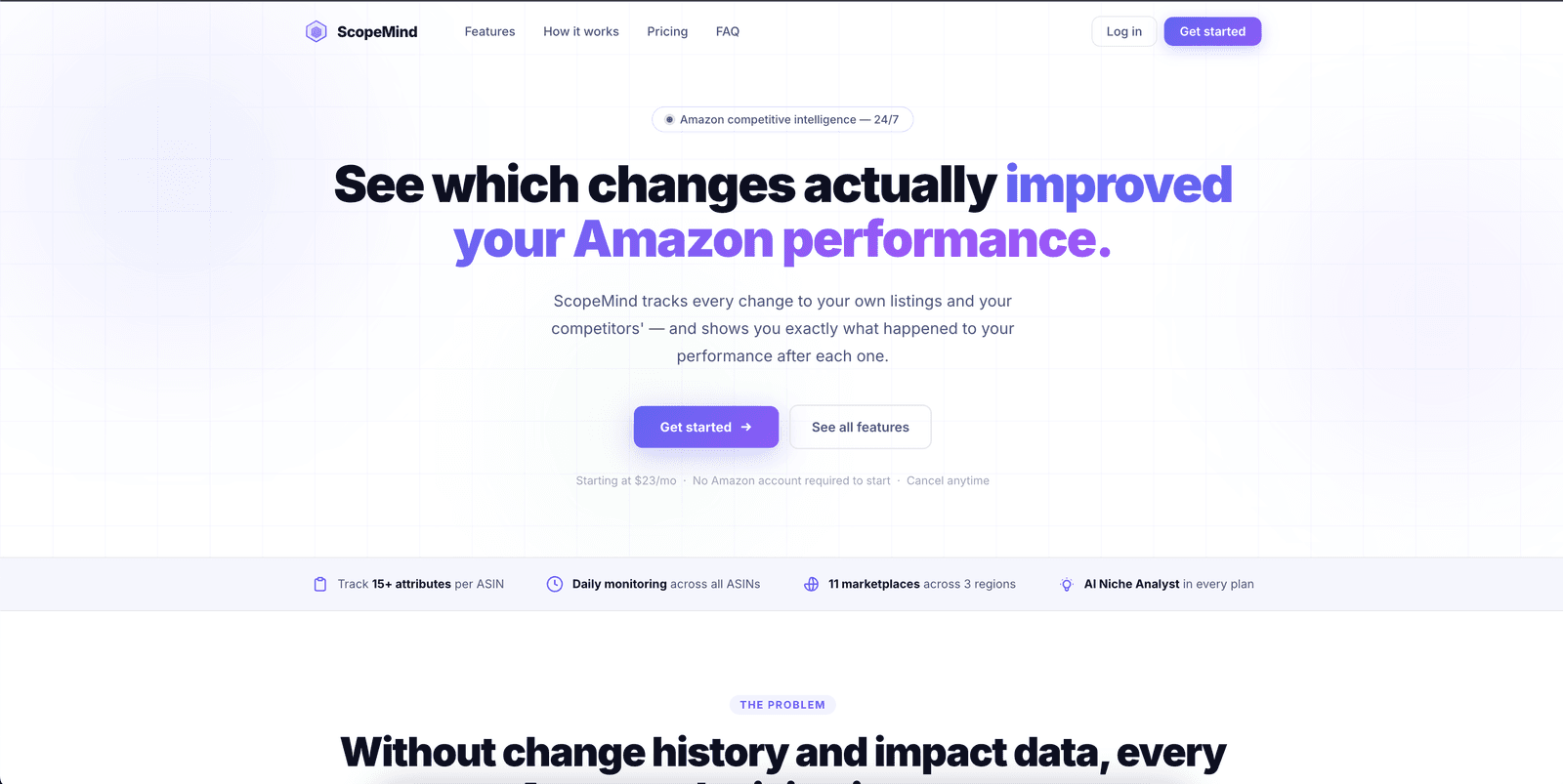
Scopemind is an Amazon seller tool built for founder Olav Vannik that helps merchants track their listing prices and react to the competition. Whenever a rival changes price, sellers see the shift immediately, study patterns in how competitors move, and adjust strategy before the next move happens.
The Seller Intelligence Challenge
Parallel Loop developed Scopemind from scratch as a complete analysis dashboard where Amazon sellers connect Seller Central, sync listings, and win repricing battles with data plus AI foresight. Manual spreadsheet tracking cannot keep pace with Buy Box dynamics across dozens of ASINs. Sellers needed automated listing sync, competitor monitoring per SKU, visual histories that reveal cadence and depth of rival discounts, and predictive signals that answer when the next price change is likely. Three full-stack developers shipped React and Next.js analytics, Node.js and Express ingestion, PostgreSQL time-series storage, Gemini-powered forecasts, and AWS EC2 workers that poll and process marketplace data.
- Manual Competitor Price Checks
- No Historical Graphs per ASIN
- Missed Patterns Before Rivals Move Again
- Disconnected Seller Central Data
- Guesswork on Next Price Change Timing
- Amazon Account Connect + Listing Sync
- Competitor Change Graphs per Listing
- Pattern Analysis Across Rivals
- Gemini AI Next-Change Predictions
- PostgreSQL + AWS EC2 Analytics Core
Phase 1: Seller Dashboard & Listing Sync
We developed a complete analysis dashboard where sellers connect their Amazon seller account and sync their listings. OAuth-style Seller Central linking pulls active SKUs, current price, and competitive offers into PostgreSQL. The Scopemind home view highlights listings with recent rival movement so operators prioritize ASINs that matter to revenue. Express APIs normalize Amazon payloads into a consistent schema for charts and alerts on the Next.js front end.
Our custom ecommerce tools and custom software development team built responsive React visualizations that render competitor timelines without slowing the dashboard, even when sellers manage large catalogs on scopemind.io.
Phase 2: Competitor Graphs, Pattern Insights & AI Predictions
Whenever competitor pricing changes, Scopemind creates a graph of changes for each listing so sellers see exactly how rivals behave over time. Spike detection highlights aggressive undercuts, gradual erosion, and promotional windows. Sellers compare their own price line against top competitors on the same chart, making it obvious when they are trailing the Buy Box or leading with margin to spare.
Using AI with Gemini APIs, we predict when competitors are likely to change prices next so sellers can act wisely and drive more sales. Historical cadence, day-of-week effects, and recent velocity feed model prompts that output forecast windows and confidence hints inside the dashboard. Our AI and machine learning engineering approach keeps human-readable explanations alongside scores so founders like Olav Vannik can trust recommendations during fast-moving campaigns.
- Tracking: Own listing prices plus competitor moves in one place.
- Visualization: Per-listing graphs when rivals change price.
- Patterns: See how competitors adjust before the next swing.
- Prediction: Gemini forecasts timing of future price changes.
- Outcome: Proactive repricing that protects margin and volume.
Quantified Business Outcomes
Scopemind gives Amazon sellers a proactive pricing cockpit: synced listings, rival graphs, pattern literacy, and AI timing signals in one product.
| Performance Metric | Before Scopemind | Scopemind (Parallel Loop) |
| Data Source | Manual checks | Amazon Account Sync + Listing Import |
| Competitor Insight | Point-in-time snapshots | Per-Listing Price Change Graphs |
| Strategy | Reactive repricing | Pattern Analysis + Early Action |
| Forecasting | None | Gemini AI Next Price Change Predictions |
Technical Deep-Dive: Frequently Asked Questions
How does Scopemind sync Amazon seller listings?
Sellers authenticate against Amazon Seller Central APIs through the Scopemind onboarding flow. Node.js workers on AWS EC2 pull catalog and offer data on a schedule, upserting PostgreSQL records for each ASIN, seller SKU, and tracked competitor identifiers linked to that listing.
What appears on the competitor price graph?
Each graph plots the seller's price alongside competitor offer prices over time. Annotations mark change events so users spot cadence: weekend dips, follow-the-leader cuts, or sudden Buy Box grabs. Filters let teams focus on one listing or compare multiple rivals that share the same niche.
How accurate are Gemini price change predictions?
Models consume weeks of competitor history per ASIN, not single data points. Gemini returns predicted windows and confidence tiers that the UI surfaces next to live graphs. Sellers still approve final repricing decisions, but they enter those decisions with timing intelligence instead of guessing when rivals will move again.