
Cloud DevOps Services AWS, Azure & Kubernetes
Senior team building cloud infrastructure, CI/CD pipelines, Kubernetes orchestration, observability, and DevOps automation on AWS, Azure, and GCP. Production-grade by Day 1. USD pricing.
We audit your cloud stack, find the cost and reliability gaps, and quote a fixed-scope fix.
Get started in 60 seconds
Who we've built for.






How we work
- Cloud platforms
- AWS · Azure · Google Cloud Platform · Hetzner · DigitalOcean for cost-sensitive workloads
- Orchestration
- Kubernetes (EKS, AKS, GKE) · AWS ECS · Docker · Helm · Argo CD
- CI/CD
- GitHub Actions · GitLab CI · Azure DevOps · CircleCI · Argo Workflows
- Infrastructure
- Terraform · Pulumi · AWS CloudFormation · Ansible · Crossplane
- Observability
- Datadog · Grafana · Prometheus · OpenTelemetry · Sentry · CloudWatch
- Pricing in USD
- Infra sprint from $5,000 · Production cloud build from $16,000 · Kubernetes migration from $24,000
You already know what DevOps is. You are here to find a team that ships production infrastructure, gets the CI/CD pipeline right, and reduces your cloud bill. The rest of this page covers the cloud platform decision, what we build, how we run an engagement, what drives cost, and the questions every CTO asks before signing.
Industries we serve hardest
- Finance and fintechPCI-aligned infrastructure, audit logging, regulated cloud workloads.
- Retail and e-commercePeak-season scaling, multi-region deployments, edge caching.
- Logistics and supply chainEvent-driven architectures, high-throughput data pipelines.
- Healthcare and life sciencesHIPAA-compliant cloud, GxP-aligned audit trails.
- ManufacturingIIoT data pipelines, edge-to-cloud sync, MES integration.
Recent DevOps builds
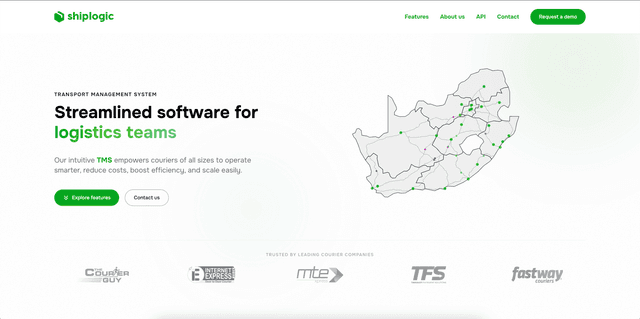
Event-driven AWS architecture with carrier-API integrations.
Read case study →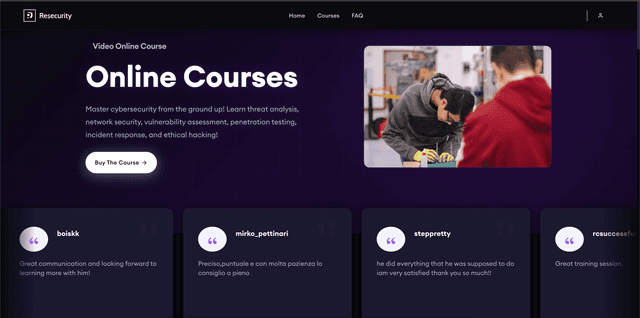
Multi-tenant cloud platform with audit logging.
Read case study →
Production cloud build with Kubernetes orchestration.
Read case study →AWS vs. Azure vs. Google Cloud Platform
The cloud platform choice shapes available services, pricing structure, talent availability, and integration depth. The three major hyperscalers compared.
| Dimension | AWS | Azure | GCP |
|---|---|---|---|
| Best for | Broad service catalogue, mature managed services | Microsoft 365 / AD shops, hybrid cloud | Data analytics, AI/ML, BigQuery-centric |
| Market share | ~31% | ~25% | ~11% |
| Strongest service | EC2, S3, Lambda, RDS, EKS | Active Directory, Azure AD, AKS | BigQuery, Vertex AI, Cloud Run |
| Pricing model | Pay-as-you-go, Savings Plans | Pay-as-you-go, Reserved + Hybrid Benefit | Pay-as-you-go, Committed Use, sustained discount |
| Compliance | All major (HIPAA, PCI, SOC 2, FedRAMP) | All major + Microsoft compliance | All major + healthcare focus |
| Talent pool | Largest | Large (Microsoft-aligned) | Smaller but specialised |
| Kubernetes | EKS (standard) | AKS (deepest AD integration) | GKE (best-managed K8s) |
| AI/ML | Bedrock, SageMaker | Azure OpenAI Service | Vertex AI, Gemini |
Decision rules of thumb. AWS for the broadest service catalogue and the most mature managed services (about 60% of new builds we ship). Azure when the organisation is already on Microsoft 365, has heavy Active Directory dependence, or wants OpenAI integration via Azure OpenAI Service (about 25%). GCP when data warehousing (BigQuery) or AI tooling (Vertex AI, Gemini) is central to the workload (about 15%).
What we ship
Cloud infrastructure builds
Greenfield AWS, Azure, or GCP environments with Terraform, IAM (least-privilege), networking (VPC design, transit gateways), secrets management (AWS Secrets Manager, Azure Key Vault, GCP Secret Manager), and observability from Day 1.
CI/CD pipelines
GitHub Actions, GitLab CI, or Azure DevOps with automated testing, security scanning (Snyk, Trivy, Checkov), progressive deployment (canary, blue-green, feature-flag rollouts via LaunchDarkly or Flagsmith).
Kubernetes orchestration
EKS, AKS, or GKE with Helm charts, Argo CD for GitOps, HPA and VPA autoscaling, service mesh (Istio or Linkerd) where it earns its place. We do not push Kubernetes when managed services would do.
Cloud cost optimisation
Right-sizing, Reserved Instances or Savings Plans, spot instances for batch workloads, idle resource cleanup, automated tagging. Typical 25 to 40% reduction in monthly cloud spend.
Observability stacks
Datadog, Grafana plus Prometheus, or AWS-native (CloudWatch, X-Ray) with custom dashboards, alerting (PagerDuty integration), and on-call runbooks. SLOs and error budgets per service.
Cloud migration
Lift-and-shift, replatform, or refactor. Strangler-fig migrations for production workloads, never big-bang. Phased per service or per environment with parallel-run periods.
Capability detail: Azure AI cloud, LangChain development, n8n automation, Workato integration, Replit development, Strapi CMS.
Use cases — concrete examples per engagement
Greenfield production cloud build (AWS)
New AWS account with multi-account organisation structure (separate accounts for dev, staging, prod). Terraform modules for VPC, IAM, ECS or EKS, RDS, S3, CloudFront. CI/CD via GitHub Actions deploying to all environments. Datadog observability. SLOs per service. Typical 8 to 12 weeks. From $16,000.
Kubernetes migration from ECS or App Engine
Existing application on AWS ECS or GCP App Engine migrated to EKS or GKE. Helm charts for each service, Argo CD for GitOps deployment, Prometheus plus Grafana observability, service mesh (Istio) for production traffic. Strangler-fig migration over 12 to 16 weeks. From $24,000.
Cloud cost optimisation
Audit your AWS, Azure, or GCP usage. Identify idle resources, right-size opportunities, Savings Plans or Reserved Instance recommendations. Implement automated tagging, budget alerts, scheduled shutdowns for non-prod. Typical 4 to 6 week engagement. From $6,000. Typical payback in 3 to 6 months from cloud-bill reduction (25 to 40% reduction common).
Multi-region disaster recovery and HA setup
Primary region plus warm-standby in a second region. Cross-region database replication (Aurora Global Database or DynamoDB Global Tables). DNS-based failover via Route 53 health checks. Backup and restore tested quarterly. Typical 6 to 10 weeks. From $12,000.
Industry benchmark
Per DORA 2025 State of DevOps Report, elite-performing teams deploy multiple times per day, have under-1-hour lead time, recover from incidents in under 1 hour, and have under 5% change failure rate. Our engagements target elite or high performer levels by default.
How we run a cloud DevOps engagement
Phase 1: Audit (1 week)
Current-state architecture review. Cost analysis (where the money is going by service, by tag, by environment). Reliability assessment (uptime history, incident review). Security gap audit (IAM least-privilege violations, public-facing resources, secrets in code).
Phase 2: Design (1 to 2 weeks)
Target architecture diagram. Migration plan with phased cutover. Terraform module structure. IAM and security model. SLO targets per service. Cost projection.
Phase 3: Build (4 to 12 weeks)
Infrastructure as code, CI/CD pipelines, Kubernetes manifests, observability stack. Two-week sprints with weekly demos. All changes through pull requests with peer review.
Phase 4: Migration or cutover (2 to 4 weeks)
Phased rollout per service or per environment. Parallel-run with rollback at every step. Feature flags for traffic shifting. Database migrations through dual-write then cutover patterns.
Phase 5: Stabilise (2 to 4 weeks)
On-call rotation handover, runbooks, incident-response plan, ongoing monitoring. SLO and error-budget review meetings monthly post-handover if we are on retainer.
What drives cloud DevOps cost
Cloud DevOps engagements vary 3x to 6x in cost depending on six factors.
- Number of services and environments. Single-service deployment is baseline. Multi-service production with separate dev, staging, prod environments adds 60 to 100%.
- Orchestration choice. Managed services (Fargate, App Runner, Cloud Run) is baseline. Self-managed Kubernetes adds 40 to 70%.
- Compliance scope. Standard SOC 2 readiness is baseline. HIPAA BAA, PCI scope, FedRAMP-aligned controls add 30 to 60%.
- Migration scope. Lift-and-shift is fastest. Refactor to cloud-native (containers, managed services, event-driven) adds 50 to 100%.
- Observability depth. Basic CloudWatch is baseline. Full Datadog with SLOs, distributed tracing, custom dashboards adds 20 to 35%.
- On-call requirements. Business-hours support is baseline. 24/7 on-call with under-15-minute response SLA adds $2,000 to $4,000 per month to retainer.
Pricing
Infrastructure sprint
From $5,000
- Single service deployed cleanly.
- Terraform, CI/CD, monitoring.
- 3 to 4 weeks.
Production cloud build
From $16,000
- Multi-service infrastructure with Kubernetes or ECS, full observability, IAM model.
- 8 to 12 weeks.
Kubernetes migration
From $6,000
- Existing app migrated to EKS, AKS, or GKE with Helm, Argo CD, observability.
- 12 to 16 weeks.
Cloud cost optimisation engagement
From $6,000
- Audit plus implementation.
- Typical payback 3 to 6 months.
Multi-region HA / DR setup
From $12,000
- Primary plus warm-standby in second region with automated failover.
- 6 to 10 weeks.
DevOps retainer
From $4,500 / month
- On-call cover, ongoing infrastructure work, CI/CD maintenance, security patching.
FAQ
AWS for breadth and managed services (about 60% of our new builds). Azure when on Microsoft 365 or AD-heavy environments (~25%). GCP for BigQuery-centric or Vertex AI workloads (~15%). We pick per workload, not per brand. Multi-cloud is rarely worth the complexity for under-100-engineer teams.