
AI Development Services for Ambitious Product Teams
Senior AI engineering team building production agents, RAG systems, and LLM integration. Shipped in 4–10 weeks. Fixed-price tiers in USD. EU AI Act-ready by default.
We tell you whether an AI agent actually solves your problem — or whether a simpler workflow does.
Get started in 60 seconds
Who we've built for.






How we work
- What we ship
- AI agents · RAG systems · LLM features inside existing products · Multi-agent workflows
- Model stack
- OpenAI GPT-4o · Anthropic Claude · Llama / Mistral self-hosted · Pinecone · Weaviate · pgvector
- Frameworks
- LangChain · LangGraph · OpenAI Assistants API · Anthropic Tool Use · Model Context Protocol (MCP)
- Pricing
- LLM feature from $7,000 · Single agent from $11,000 · Production RAG from $21,000 · Multi-agent from $35,000
- Compliance
- EU AI Act · GDPR · SOC 2 · ISO 27001 · zero-retention API tiers
- Hosting
- AWS Frankfurt · AWS Stockholm · Azure West Europe · self-hosted Llama or Mistral for air-gapped workloads
You already know what AI is. You're here to find a team that ships production AI that survives contact with real users, real cost ceilings, the EU AI Act, and a board that asks hard questions. That's the job. The rest of this page covers how we run it, what it costs, and the work we've shipped.
Industries we serve hardest
AI maturity varies by sector. We have the most depth in five.
- Finance and fintechRisk scoring, document automation, regulated agent workflows, MiFID II / FCA / SEC-aligned audit logging.
- Healthcare and life sciencesClinical document RAG, regulated AI under HIPAA / GxP / EU AI Act high-risk tier.
- Legal and complianceCase-law retrieval, contract-review agents, citation enforcement, output validators.
- E-commerce and retailSemantic product search, AI recommendations, support-triage agents, PDP generation at scale.
- B2B SaaSLLM features inside existing products, AI copilots, agentic workflows for ops and customer success.
Recent AI builds — named clients
We let the work speak. Three production AI systems shipped recently:
Custom retrieval over case law plus GPT-4o for drafting. Production legaltech.
Read case study →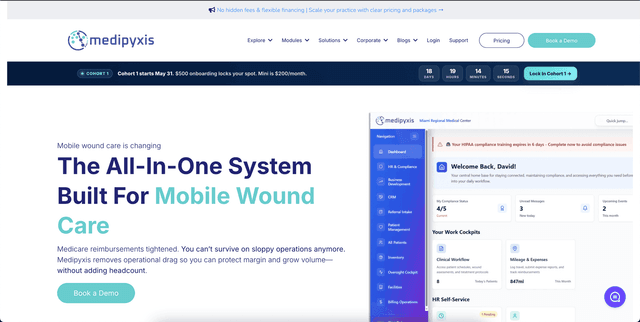
Healthcare AI workflow under regulated controls. GxP-aligned audit trail.
Read case study →
RAG plus deterministic guardrails for a compliance-sensitive workflow.
Read case study →What we build
AI agents for ops workflows
Support triage, sales-ops qualification, finance-ops invoice matching, exception handling. Each agent connects to your tools and operates inside guardrails you define.
RAG systems for internal knowledge
Retrieval-augmented generation over your documents with cited answers, not hallucinations. Vector DB plus retrieval, re-ranking, hybrid search, and a chat UI or direct Slack and Teams integration.
LLM features inside existing products
AI-generated reports, summary panels, content suggestions, semantic search. Built with streaming UX, token-cost monitoring, and graceful fallbacks.
Multi-agent systems
Orchestrated agents using LangGraph, CrewAI, or custom orchestration when one agent isn't enough.
Capability detail across the AI stack: AI-powered software, generative AI, machine learning, computer vision, NLP development, AI chatbot development.
For agent orchestration, see LangChain development.
Hallucinations — how we keep AI honest enough to ship
Two layers. Layer 1 is RAG with citation enforcement, so the model cannot answer without a source from your knowledge base. Layer 2 is deterministic guardrails — pattern checks, output validators, refusal rules — that catch what RAG misses. We run an eval harness against known-hard inputs and gate deployment on a passing score. If the agent can't pass evals on the test set, it doesn't go to production.
How an AI build runs — four phases, eight weeks
- Week 1 — Use-case validation. We document the workflow the agent replaces, the success metric, and the EU AI Act risk classification. Manual baseline so we know what 'good' looks like before any code.
- Weeks 2–3 — Prototype. Bare-bones agent against real data. Token cost measured. Failure modes catalogued. Eval harness scaffolded. Demo at end of Week 3.
- Weeks 4–6 — Productionise. Tool integrations, RAG layer if needed, observability, full eval harness, human-in-the-loop hooks, AI Act documentation pack. Deploy to staging.
- Weeks 7–8 — Harden and launch. Load testing, prompt-injection testing, cost ceilings, rollout plan, kill-switch. Production deploy.
The model and tooling stack we ship on
- LLMs: OpenAI GPT-4o and GPT-4 Turbo for general reasoning. Anthropic Claude (Sonnet, Opus) for long-context tool-use and code-heavy work. Llama or Mistral self-hosted via Ollama or Together.ai when data residency demands it.
- Agent frameworks: LangChain and LangGraph for orchestration with stateful graphs. OpenAI Assistants API or Anthropic Tool Use for simpler single-agent builds. The Model Context Protocol (MCP) when the agent needs to connect to many external tools cleanly.
- Retrieval: Pinecone for managed scale. Weaviate for hybrid search. pgvector when Postgres is already in the stack. Chroma for fast prototypes. Embedding models picked per task — OpenAI text-embedding-3-large, Cohere Embed v3, or open-source BGE.
- Observability: Langfuse or LangSmith for trace logging. Sentry for errors. Custom token-cost monitoring with monthly ceilings and automatic throttling. We treat token cost as a first-class production metric.
EU AI Act, GDPR, SOC 2 — built in
Every build ships with the documentation pack regulators and audit firms ask for. AI Act risk-tier classification in Week 1. Model card documenting training data and known limits. Audit logging of every prompt and inference call for AI Act traceability. Prompt-injection testing as part of the eval harness. PII redaction on the inbound side before any prompt assembly. A published transparency notice that reflects what the AI does. On data: Anthropic and OpenAI enterprise APIs run on zero-retention tiers — your data is not used for training and is not stored beyond the request. Application layer in AWS Frankfurt, AWS Stockholm, or Azure West Europe by default. Where the workload requires fully air-gapped data, we self-host an open-source model on EU infrastructure end-to-end.
Pricing
Single-purpose AI agent
From $11,000
- One workflow, two to four tool integrations.
- Eval harness, deploy.
Production RAG system
From $21,000
- Document ingestion pipeline, vector DB.
- Retrieval plus re-ranking, chat UI, citations, tuned for your corpus.
LLM feature inside existing product
From $7,000
- One feature, streaming UX.
- Cost monitoring, fallback handling.
Multi-agent system
From $35,000
- Two to four orchestrated agents.
- Eval harness, human-in-the-loop dashboard.
AI consulting and roadmap work
Not every AI conversation should end in a build. Some end in 'don't build that — you'd be paying us to ship a chatbot when a SQL view would do.' For teams still mapping where AI earns its place, we offer structured AI consulting engagements: capability audit, opportunity prioritisation, vendor selection between OpenAI / Anthropic / open-source, EU AI Act risk classification, and a 90-day roadmap.
FAQ
Yes, when scoped right. We classify the use case against the AI Act's four risk tiers in Week 1 and ship the documentation pack (model card, data inventory, audit logging spec, transparency notice, human-in-the-loop hooks) with the build. Most B2B agents and RAG systems fall in 'limited risk' or 'minimal risk' — but the documentation work is still required and we do it.