
Engineering ShipLogic: One Centralized API for Every Shipping Carrier
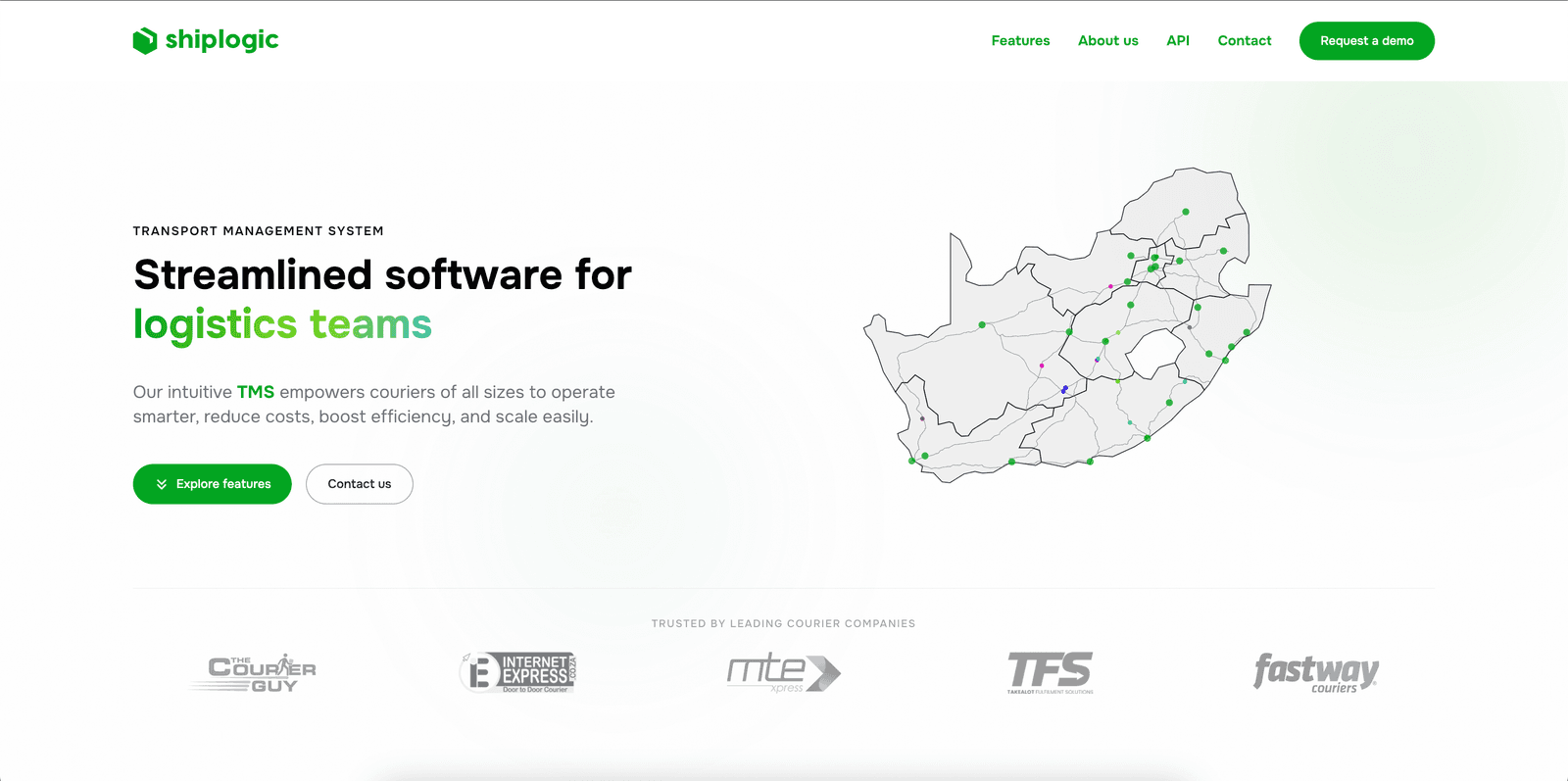
“Parallel Loop gave us one dashboard for every carrier: book, print, track history, cancel, all through our own APIs. Our customers stopped juggling five different shipping portals.”
What is a multi-carrier shipping platform?
A multi-carrier shipping platform is a single system that connects to many shipping carriers (FedEx, UPS, DHL, and others) through one unified API and interface. Instead of logging into a separate portal per carrier, operations teams quote, book, print labels, track, and cancel shipments across every carrier from one dashboard. It removes duplicate data entry and scattered label files, and gives one source of truth for shipment history.
ShipLogic is a centralized platform for shipping carriers. In our expert logistics and supply chain software development practice, we often encounter organizations burdened by fragmented shipping portals. Instead of integrating each carrier separately, ShipLogic maintains proprietary APIs wired to major logistics providers so customers access and book any carrier through one unified API. Operations teams get a single logistics cockpit instead of fragmented carrier portals.
The Logistics Integration Challenge
Parallel Loop developed ShipLogic from scratch as a complete logistics workflow dashboard backed by multi-carrier API orchestration. As outlined in our ML supply chain software guide and research into warehouse management system development, ecommerce and 3PL teams lose hours switching between carrier sites, re-entering addresses, and hunting for label PDFs in email.
Similar to our work on the Dutch Goat warehouse inventory platform, ShipLogic needed reliable third-party logistics API adapters, normalized booking payloads, printable labels, searchable shipment history, and in-app cancellations. Two full-stack developers delivered React and Next.js UX, Node.js and Express services, PostgreSQL as the system of record, and AWS EC2 workers that sync status with carrier endpoints.
- Separate Login per Shipping Carrier
- Duplicate Address & Package Entry
- Labels Scattered Across Inboxes
- No Unified Booking History
- Cancellations via Phone or Email
- Centralized API Across All Carriers
- Create Shipments from Any Provider
- Print Labels Inside Dashboard
- Full History of Booked Labels
- Cancel Shipments Directly In-App
Phase 1: Unified Carrier APIs & Booking Orchestration
ShipLogic connects proprietary APIs to shipping carriers so one centralized interface can quote, book, and track across providers. Express services normalize rate requests, service levels, and address validation responses into a consistent schema. PostgreSQL stores carrier credentials, account mappings, and shipment identifiers returned from third-party logistics APIs. Error handling and retry logic keep partial carrier outages from blocking entire booking sessions.
Our custom software development pod and specialists in marketplace connectors deployed adapter modules on AWS EC2 that translate ShipLogic commands into each carrier's native API format while exposing a single contract to the Next.js dashboard and external integrators on shiplogic.com.
Phase 2: Logistics Workflow Dashboard
We developed a complete logistics workflow dashboard where teams create a shipment from any carrier, print labels, review booking history, and cancel without leaving ShipLogic. The booking wizard collects parcel details once, lets users pick the best carrier option, and confirms charges before submission. Label generation streams PDF or ZPL output ready for warehouse printers. A history view lists every booked label with filters by carrier, date, and status. Cancellations call the correct carrier endpoint and update PostgreSQL so finance and support see accurate state.
- Unified access: One API and UI for every connected carrier.
- Booking: Create shipments with any provider from the same form.
- Labels: Print shipping labels immediately after confirmation.
- History: Searchable archive of all booked labels and tracking IDs.
- Cancellations: Void shipments in-dashboard when carriers allow it.
Quantified Business Outcomes
Teams stopped juggling five carrier portals and moved to one API, one dashboard, and one history of record. Booking went from re-keyed per carrier to a single workflow for any carrier. Labels moved from scattered inboxes to print-on-confirmation. Cancellations moved from phone and email to in-app. ShipLogic replaces multi-portal shipping chaos with one API, one dashboard, and one history of truth for operations teams.
| Performance Metric | Before ShipLogic | ShipLogic (Parallel Loop) |
| Carrier Access | Five separate carrier portals | One Centralized API + Cockpit |
| Shipment Creation | Re-keyed per carrier | Single Workflow, Any Carrier |
| Labels | Scattered inboxes & files | Print on Confirmation |
| Cancellations & Support | Phone and email requests | In-App Void & Single History |
Technical Deep-Dive: Frequently Asked Questions
What is a multi-carrier shipping platform?
A single system that connects to many carriers through one unified API and dashboard, so teams quote, book, label, track, and cancel across every carrier from one place instead of one portal per carrier.
How does the centralized ShipLogic API differ from calling carriers directly?
ShipLogic exposes one authentication model, one shipment schema, and one error format. Behind the scenes, Node.js adapters map requests to each carrier's native API. Integrators build once against ShipLogic instead of maintaining a separate SDK per provider.
Can operations print labels for any booked carrier?
Yes. After a successful booking, the dashboard retrieves the label artifact from the carrier response or a follow-up endpoint and renders it for browser or thermal printers. Historical bookings retain label files so warehouses can reprint without rebooking postage.
How are cancellations handled across carriers?
Each carrier adapter implements its own void rules. The dashboard calls one unified cancel action, Express routes it to the correct provider, and PostgreSQL updates the shipment row so history and billing exports stay accurate.
Need a multi-carrier shipping platform built?
Book a free 30-minute call. We will scope your carrier integrations, the booking and label workflow, and the cancellation rules, and give you a fixed timeline and price. On Parallel Loop, starter supply chain builds start from $19,000, real-time visibility platforms from $32,000, TMS or WMS modules from $42,000, and custom logistics platforms from $48,000.