
Engineering Medipyxis's All-in-One AI Hospital & Clinic Operations Platform
“Parallel Loop delivered the operational backbone our hospitals needed, patient records, inventory, CRM, and finance in one platform, with AI that lets our staff understand a complete medical history in seconds instead of digging through documents.”
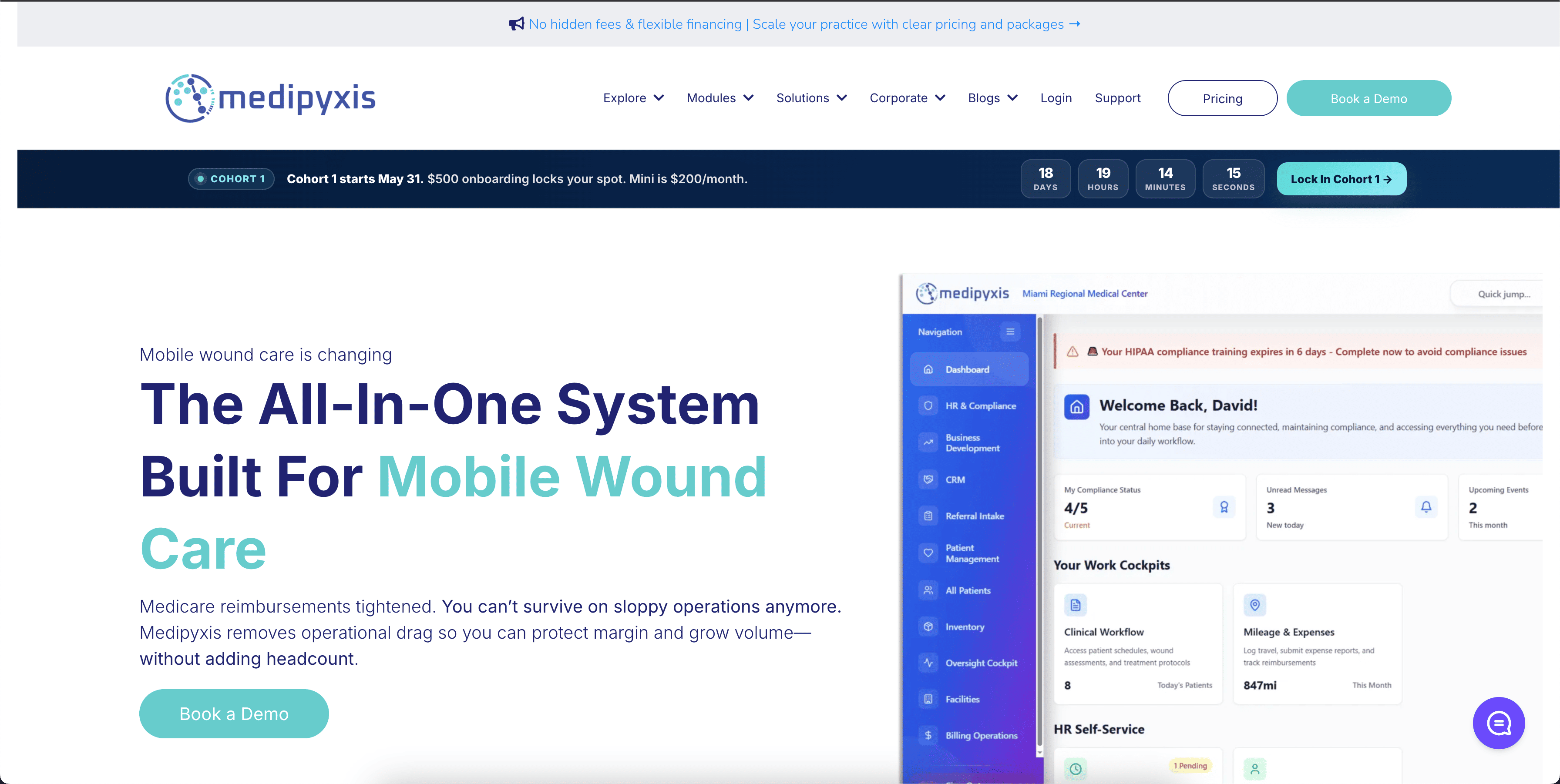
Medipyxis is an all-in-one platform for hospitals and medical clinics, enabling organizations to sign up, onboard staff, and manage employees, patients, complete medical histories, medicine inventory, CRM and leads, and internal finance from a single unified system.
The Operational Challenge
Parallel Loop partnered with Medipyxis to engineer a production-grade healthcare operations platform that replaces fragmented spreadsheets, disconnected CRM tools, and manual document review workflows. Hospitals and clinics needed one secure environment to run day-to-day operations: staff and role management, longitudinal patient records, pharmacy inventory tracking, lead pipelines, and financial oversight, without switching between five different software products. Medical teams also needed faster clinical context: reading through years of documents before every appointment was slowing staff down and increasing operational risk. Medipyxis required both a polished hospital-facing dashboard and a powerful admin command center with full visibility into third-party API health across the platform.
- Disconnected Tools for Staff, CRM & Finance
- Manual Medical History Document Review
- No Centralized Medicine Inventory System
- Zero Admin Visibility into 3rd Party APIs
- Slow Onboarding for New Hospital Tenants
- Next.js & React Hospital Operations Dashboard
- Node.js API with PostgreSQL & MongoDB Data Layer
- AI-Assisted Medical History Summaries (OpenAI + Hugging Face)
- Admin Panel with Real-Time 3rd Party API Logs
- Stripe Billing & Agenda.js Background Jobs
Phase 1: Hospital Dashboard & Unified Operations Modules
We developed a complete hospital dashboard where clinics manage their entire organization in one place. Hospitals can sign up, configure their tenant, and manage employees, patients, and full medical histories. The platform includes dedicated modules for medicine inventory management, CRM and lead tracking, and internal finance, giving administrators and clinical staff a single source of truth for operational data.
Our full-stack custom software engineering team built the experience on React.js and Next.js with a Node.js and Express.js API layer, using PostgreSQL for relational healthcare records and MongoDB for flexible operational documents. Agenda Jobs orchestrate recurring sync tasks, notifications, and background workflows without blocking active user sessions.
Phase 2: Admin Command Center & AI Medical History Assistant
We engineered a dedicated admin dashboard for platform-wide governance and API observability. Administrators can manage all users across hospital tenants and inspect logs for every third-party API integration, diagnosing failures, reviewing payloads, and restoring integrations before they impact clinical or billing workflows.
Our AI engineering pod integrated OpenAI and Hugging Face so medical staff get instant patient context. Instead of reading through every document in a patient's history, staff receive AI-synthesized summaries of the complete medical record in seconds, accelerating rounds, intake, and follow-up care. This custom AI workflow automation layer was designed for high-trust healthcare environments with careful prompt structuring and secure data handling across the application stack.
- Hospital Operations Dashboard: Employee, patient, inventory, CRM, leads, and finance modules in one tenant-scoped interface.
- Admin Command Center: Cross-tenant user management and real-time third-party API log inspection.
- AI History Assistant: OpenAI and Hugging Face pipelines that summarize longitudinal medical records for clinical staff.
- Billing Infrastructure: Stripe API integration for subscription and payment flows across hospital accounts.
Quantified Business Outcomes
Our platform architecture gave Medipyxis a scalable foundation for hospitals and clinics to run operations and clinical workflows from a single system.
| Performance Metric | Fragmented Legacy Workflow | Parallel Loop Medipyxis Platform |
| Operational Tooling | Multiple Disconnected Systems | Single All-in-One Hospital & Clinic Platform |
| Medical History Review | Manual Document Reading (Minutes to Hours) | AI Summaries in Seconds |
| 3rd Party API Visibility | No Centralized Admin Logs | Full API Log Dashboard for Admins |
| Core Modules Delivered | Partial / Siloed Features | Staff, Patients, Inventory, CRM, Leads & Finance |
Technical Deep-Dive: Frequently Asked Questions
Why did Medipyxis use both PostgreSQL and MongoDB?
PostgreSQL handles structured relational data, patients, staff roles, financial records, and inventory line items, with strong consistency and query performance. MongoDB stores flexible operational documents, integration payloads, and job metadata for Agenda-backed background workers, keeping the hot application path fast while preserving deep audit history.
How does the AI medical history assistant work without slowing the dashboard?
AI summarization runs through asynchronous Node.js workers triggered on demand or via Agenda-scheduled jobs. The React dashboard receives cached summaries when available and streams fresh results when a clinician requests an updated context view, keeping the primary UI responsive during OpenAI and Hugging Face inference.
What does the admin API logging dashboard monitor?
The admin panel captures inbound and outbound events for every third-party API connected to the platform, including payment, communications, and external healthcare integrations. Administrators can filter by hospital tenant, inspect failure payloads, and trace issues before they affect patient billing or clinical workflows.