
Warehouse Management System Development: Cost, Features and Build
How to build a custom WMS: core modules, integrations, cost and timeline. Book a free scoping call with Parallel Loop.
TL;DR
- A custom WMS is built around your warehouse, not the other way round. Core modules: receiving and putaway, picking and packing, shipping, tracking and labour planning.
- It integrates with your ERP, OMS, PIM and carrier APIs so data flows without re-keying.
- On Parallel Loop, starter supply chain builds start from $19,000, real-time visibility platforms from $32,000, TMS or WMS modules from $42,000, and custom logistics platforms from $48,000.
- Build custom when a packaged WMS cannot match your process or integrate with your stack. See the WMS features guide for the explainer view.
What is warehouse management system development?
Warehouse management system development is the process of building a custom WMS tailored to one operation. Instead of adapting your warehouse to a packaged product, the software is shaped around your layout, SKUs, fulfilment flow and integrations, covering receiving, putaway, picking, packing, shipping, tracking and labour planning.
The short answer
Build a custom WMS when your warehouse is a competitive edge and no packaged product fits, or when you need integration a vendor cannot give you. It costs more upfront than a subscription, but you own it and it works the way you do.
Core modules of a custom WMS
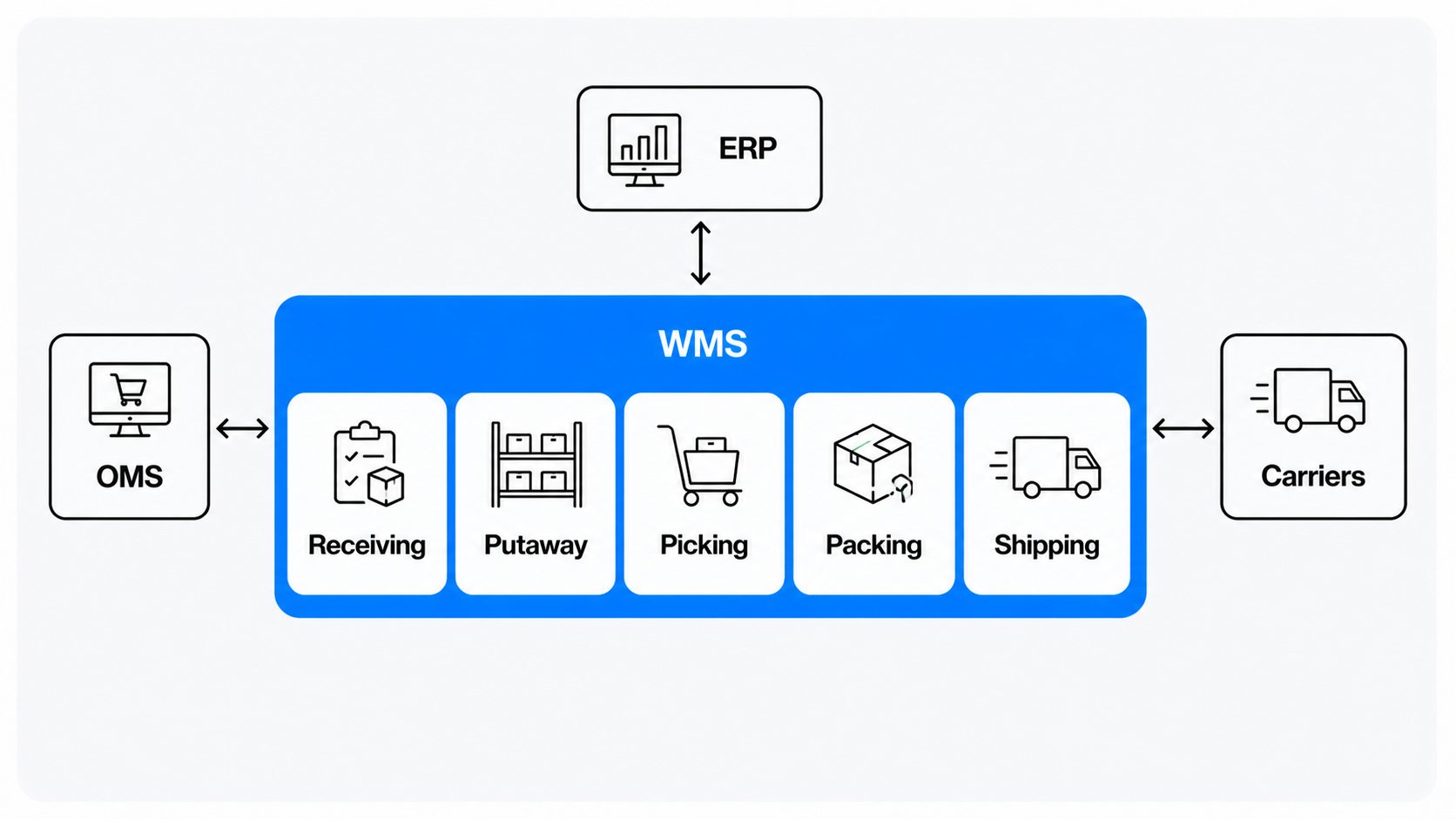
- Receiving and putaway with directed storage locations.
- Picking and packing with optimised, location-sequenced lists.
- Shipping, labels and carrier handoff.
- Real-time inventory tracking with barcode and RFID.
- Labour planning and task sequencing.
For the feature-and-benefit overview aimed at buyers still deciding, see our warehouse management software guide.
Integrations that make a WMS worth building
A custom WMS integrates with ERP, OMS, PIM and carrier APIs, per Cleveroad and ScienceSoft. Clean integration is the whole point: one source of truth, no manual re-keying, and stock that stays accurate across systems.
How much does WMS development cost?
On Parallel Loop, starter supply chain builds start from $19,000, real-time visibility platforms from $32,000, TMS or WMS modules from $42,000, and custom logistics platforms from $48,000. Scope, integrations, automation hardware and data volume move the number. We break the drivers down in supply chain software development cost.
How long does it take?
A focused WMS core can ship in a few months, built in Agile cycles. Broader scope with automation and deep integrations extends the timeline. You see working software early and refine as you go.
Ready to build a WMS that fits your warehouse?
Book a free scoping call. We will map your layout, SKUs, fulfilment flow and integrations, then give you an honest scope, cost and timeline. No obligation.
Frequently Asked Questions
How much does it cost to develop a custom WMS?
On Parallel Loop, starter supply chain builds start from $19,000, real-time visibility platforms from $32,000, TMS or WMS modules from $42,000, and custom logistics platforms from $48,000. Scope, integrations, automation hardware and data volume are the main drivers.
What modules does a warehouse management system need?
Core modules are receiving and putaway, picking and packing, shipping, real-time inventory tracking with barcode or RFID, and labour planning. Most builds also integrate with ERP, OMS, PIM and carrier APIs.
Should I build a custom WMS or buy an off-the-shelf one?
Buy off-the-shelf when your warehouse flows are standard and you need to go live fast. Build custom when your process is a competitive edge, when a packaged product cannot match it, or when you need integration the vendor cannot provide.