
Data Pipeline Engineering. ELT, streaming, lakehouse, and reverse ETL that the business actually trusts.
Data Pipeline Engineering for orgs whose data is split across Postgres, Salesforce, Stripe, Segment, GA4, and 12 other systems. Modern ELT with Fivetran or Airbyte plus dbt, streaming with Kafka or Kinesis, lakehouse on Snowflake, BigQuery, or Databricks, reverse ETL to operational tools via Hightouch or Census, dashboards in Looker, Metabase, or Hex, and AI-ready feature stores. Shipped in 3 to 12 weeks. USD pricing.
Tell us your data sources, current warehouse (or that you need one), the business questions you cannot answer today, and any compliance constraints. Scoped plan plus quote within 3 business days.
Get started in 60 seconds
Who we've built for.







How we work
- Overview
- Three phases from data audit to live pipelines with documented models. We build pipelines that the business trusts. Documented sources, tested transformations, monitored freshness, observable failures.
- Step 1 — Scope and architecture
- One to two weeks scoping. Data source audit (every system, schema stability, change-data-capture availability, PII scope). Warehouse decision (Snowflake, BigQuery, Databricks, Postgres for smaller scope). Modeling decision (dbt for batch, Materialize or RisingWave for streaming). Reverse ETL needs. Dashboard needs. Governance and access control. SLA and freshness requirements.
- Step 2 — Build in sprints
- 2 to 10 weeks build. Two-week sprints. Source connectors via Fivetran, Airbyte, or custom Python. Warehouse setup. dbt project bootstrapped with staging, intermediate, marts layers. Tests for every model (not_null, unique, relationships, accepted_values). Documentation generated and hosted. Streaming pipelines via Kafka, Kinesis, or Pub/Sub when sub-minute freshness needed. Reverse ETL to ops tools. Dashboard library in Looker, Metabase, or Hex.
- Step 3 — Harden and launch
- Less than 1 week launch. Pipelines run on schedule. Freshness monitoring live. dbt docs published. Stakeholder training delivered. Optional retainer for new source integration, model expansion, and analytics support.
Recent data engineering and analytics builds
Recent data pipeline, analytics, and platform engineering builds.
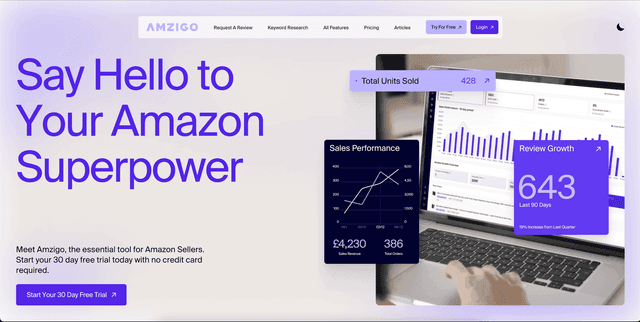
Multi-source e-commerce analytics platform pulling Amazon SP-API, advertising, and inventory data into a unified warehouse with dbt transformations, custom calculated metrics, and stakeholder dashboards. Daily SLAs met across all sources.
Read case study →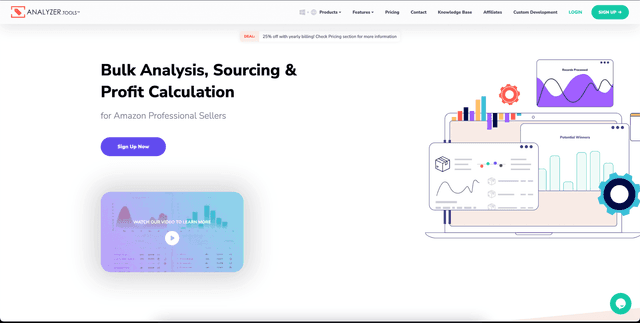
Data pipeline ingesting Amazon product, pricing, and sales rank data with custom transformations, opportunity scoring models, and high-cardinality search capabilities. Lakehouse architecture for the heavy historical query workload.
Read case study →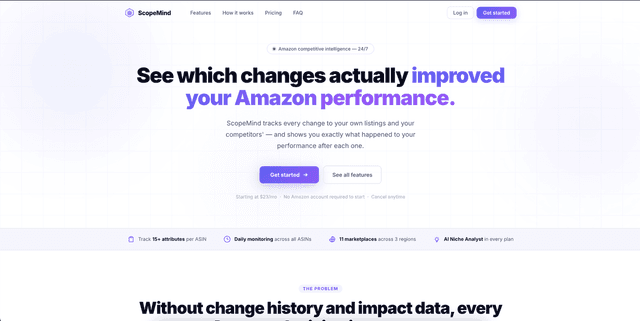
High-frequency price scraping pipeline with normalisation, deduplication, and real-time alerts. Warehouse layer for historical analysis. Reverse ETL pushing alerts and pricing recommendations back into operational tools.
Read case study →What we deliver. Data Pipeline
Source ingestion (Fivetran, Airbyte, or custom Python)
Source connectors for every system. Fivetran for the long tail of SaaS sources with mature connectors. Airbyte for self-hosted or cost-sensitive setups. Custom Python connectors for proprietary APIs and obscure systems Fivetran does not cover. Incremental ingestion where source supports it. Full refresh where it does not. Schema change detection.
Warehouse setup (Snowflake, BigQuery, Databricks, Postgres)
Warehouse provisioned per use case. Snowflake for multi-cloud and analytics-heavy. BigQuery for GCP-native and ML-heavy. Databricks for ML and large-scale data engineering. Postgres for smaller-scale analytics under 500 GB. Database structure, role-based access, cost governance, query history monitoring, and resource limits configured.
dbt project with tests and documentation
dbt project bootstrapped with staging, intermediate, and marts layers. Naming conventions documented. Source declarations for every raw table. Tests for every model: not_null, unique, relationships, accepted_values. Custom tests for business invariants. dbt docs generated and hosted. Lineage graph published. Macro library for reusable transformations.
Streaming pipelines (Kafka, Kinesis, Pub/Sub, Materialize)
Streaming infrastructure when sub-minute freshness is required. Apache Kafka self-hosted or via Confluent Cloud. AWS Kinesis or Google Pub/Sub. Materialize or RisingWave for streaming SQL. Consumers built in Python, Go, or Java. Exactly-once processing where required. Streaming-to-warehouse persistence layer.
Reverse ETL to operational tools
Reverse ETL via Hightouch or Census pushing warehouse data back into Salesforce, HubSpot, Marketo, Iterable, Customer.io, Slack, Zendesk, and other operational tools. Audience segmentation, lead scoring, and customer health scores delivered into the tools sales and marketing actually use.
Dashboards and analytics (Looker, Metabase, Hex)
Dashboards in Looker, Metabase, Hex, Mode, or Superset. LookML or semantic layer for governed metric definitions. Executive dashboards. Operational dashboards. Self-service exploration enabled for analysts. Embedded analytics for customer-facing reporting if needed.
Related capabilities: Enterprise solutions, API integration, Custom integrations, AI & machine learning, Azure AI cloud, Cloud DevOps, Custom software development, System modernization.
Typical engagement ranges
Single warehouse build
From $22,000
- Warehouse setup plus 3 to 5 source connectors plus dbt project plus first 5 to 10 models plus first dashboards.
- Best for orgs setting up a warehouse for the first time.
- 3 to 5 weeks.
Full analytics platform
From $60,000
- Warehouse plus 8 to 15 sources plus full dbt project (40 to 80 models) plus reverse ETL plus dashboards plus stakeholder training.
- Best for orgs replacing spreadsheets with a proper analytics platform.
- 6 to 10 weeks.
Enterprise data platform
From $135,000
- Multi-team data platform with governance, semantic layer, streaming pipelines, ML feature store, and on-call coverage.
- Best for enterprise orgs with multiple analytics teams and strict data SLAs.
- 12 to 20 weeks.
FAQ
Snowflake for multi-cloud teams, heavy analytics, and best-in-class query performance with predictable cost. BigQuery for GCP-native teams, ML workloads, and pay-per-query that suits bursty workloads. Databricks for heavy ML, large-scale ETL, and lakehouse architectures combining structured plus unstructured data. Postgres for smaller scope (under 500 GB) where warehouse cost is hard to justify. We pick based on cloud preference, scale, ML needs, and team skills, not on hype.