
Full-Stack Development Services One senior team from Figma to production.
End-to-end web application development: front end, back end, database, infrastructure. Built by senior full-stack engineers who own the build from Figma to production. Shipped in 8 to 20 weeks. USD pricing.
We tell you whether your build fits a single full-stack team or needs specialised squads.
Get started in 60 seconds
Who we've built for.








How we work on full-stack development
- What we build
- Web apps · SaaS platforms · Internal tools · Admin panels · APIs · Multi-tenant systems
- Front end
- Next.js 15 · React 19 · TypeScript · Tailwind CSS · shadcn/ui · SSR plus CSR
- Back end
- Node.js (Fastify, Hono) · Python (FastAPI, Django) · tRPC · GraphQL · REST
- Data
- PostgreSQL · Redis · Drizzle ORM · Prisma · Supabase · Neon · RDS · pgvector
- Infrastructure
- AWS · Vercel · Railway · Fly.io · Docker · Terraform · GitHub Actions
- Pricing in USD
- MVP from $11,000 · Production full-stack app from $38,000 · Custom platform from $55,000
Most agencies split front-end and back-end into separate teams. We do not, because the split creates handoff cost that founders end up paying for. Senior full-stack engineers own the build from Figma to production. This page covers the stack we use, the use cases we ship, and what it costs.
Recent full-stack builds
End-to-end web apps shipped by single senior teams.
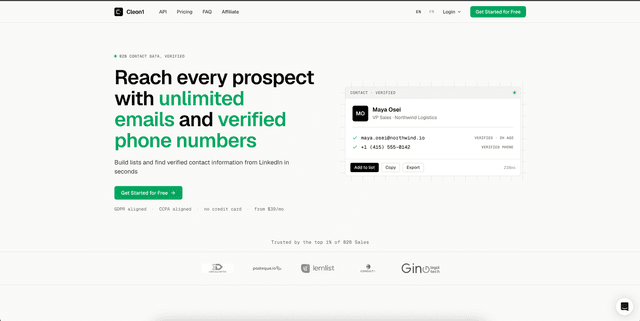
Full-stack SaaS with enrichment workflows, CRM integrations, and Stripe billing.
Read case study →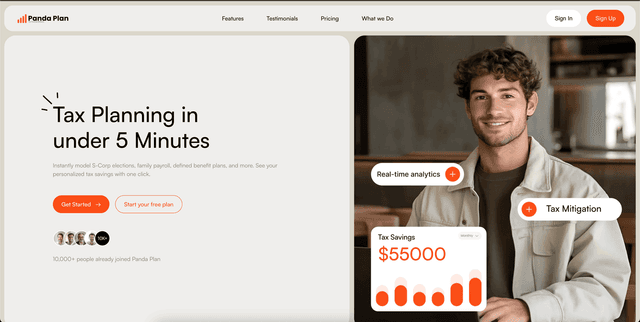
Next.js front end, calculation engine, auth, and onboarding on PostgreSQL.
Read case study →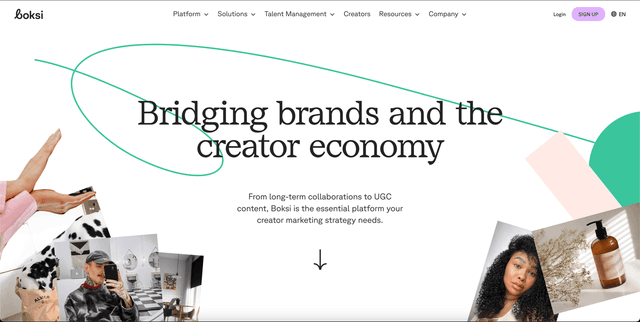
Two-sided marketplace with multi-party payouts and admin tooling.
Read case study →What we build
SaaS web applications
Multi-tenant SaaS with auth, billing, role-based access, admin panel, customer dashboard. Built on Next.js + Node.js + PostgreSQL + Stripe.
Internal tooling and admin panels
Replaces Google Sheets or Airtable with a proper application. Often integrates with your existing CRM, ERP, or data warehouse.
B2B platforms with multi-tenancy
Per-tenant isolation, per-tenant theming, per-tenant data residency. Common in fintech, healthcare, and legal builds.
API-first platforms
REST or GraphQL API as the primary product. SDK in TypeScript, Python, Go where the audience needs it. OpenAPI documentation.
Customer portals and self-service
Customer-facing surfaces with auth, billing, document delivery, in-app messaging. Often paired with a CRM or support tool integration.
Related capabilities: Custom software development, Custom web applications, Progressive web apps, B2B development, B2C development, AI-powered software, MVP development, API integration, Cloud & DevOps.
Use cases with cost ranges
B2B SaaS MVP
Multi-tenant SaaS with auth (Clerk), Stripe Billing for subscriptions, role-based access, admin panel, customer dashboard. Next.js front, Node.js back, PostgreSQL on Neon. Typical build 8 to 12 weeks. Range $11,000 to $38,000 depending on workflow count and integration complexity.
Internal tooling for ops or RevOps
Replaces Google Sheets, Airtable, or a legacy internal app. Custom dashboards, workflow automation, integration with your CRM (Salesforce, HubSpot) or data warehouse (Snowflake, BigQuery). Typical build 6 to 10 weeks. Range $11,000 to $38,000 depending on integration count.
Customer-facing portal
Auth, billing, document delivery, in-app messaging, support ticket integration. Often connects to your existing CRM and support stack. Typical build 8 to 14 weeks. Range $11,000 to $38,000 depending on integration depth and customisation.
API-first platform
REST or GraphQL API as the product. SDK in TypeScript, Python, Go. OpenAPI documentation. Developer portal with API key management. Typical build 10 to 16 weeks. Range $38,000 to $55,000 depending on SDK count and rate-limiting complexity.
How we run the build
Five-phase rhythm. Same SDLC discipline as our larger Custom Software builds.
- Discovery and scope (1 to 2 weeks). Stakeholder interviews. Architecture decision records (ADRs). Output: scoped milestones with estimated durations and tech stack confirmed.
- Design and skeleton (1 to 2 weeks). UI designed in Figma. Skeleton app with auth, database, payments wired. CI/CD pipeline configured.
- Build (4 to 12 weeks). Two-week sprints. Demo every sprint with stakeholder. Test coverage gate of 70 percent on critical paths.
- Hardening (1 to 2 weeks). Performance testing. Security review. Edge-case audit. Observability tuning.
- Launch and dual on-call (1 week plus 2 weeks). Production deploy with feature flags. Monitoring. Dual on-call. Runbook delivered.
Tech stack
Default full-stack stack. Each layer chosen for senior engineer productivity and production reliability.
- Front end. Next.js 15 with React 19 and TypeScript. Tailwind CSS plus shadcn/ui component baseline. SSR for SEO surfaces, CSR for authenticated app. App Router by default.
- Back end. Node.js (Fastify or Hono) for general API. Python (FastAPI or Django) when ML, data engineering, or scientific compute is involved. tRPC for end-to-end type safety when front and back share a repo.
- Data layer. PostgreSQL via Supabase, Neon, or RDS. Drizzle ORM (modern) or Prisma. Redis for cache and session. pgvector for embedding storage when AI features are in scope.
- Auth. Clerk for fast-launch B2B. NextAuth (Auth.js) for self-hosted. Supabase Auth when paired with Supabase Postgres. Custom OIDC for enterprise SSO.
- Payments and billing. Stripe Checkout for one-time. Stripe Billing for subscriptions. Stripe Connect for multi-party. PayPal, Adyen, and others where required.
- Infrastructure. Vercel for front end. Railway or Fly.io for non-Next services. AWS for workloads that require it. Terraform-managed where infrastructure is non-trivial.
- Observability. Sentry for errors. PostHog or Plausible for product analytics. Datadog or Grafana for metrics. Logflare or BetterStack for logs.
Security, observability, and production readiness
Every full-stack build ships with Sentry error tracking, structured logging, CI/CD with staging environments, and security review before launch. SOC 2 Type II architecture, GDPR, and HIPAA patterns available where the build requires them.
Pricing
Full-stack MVP
From $11,000
- Single workflow, auth + payments, single tenant.
- 8 to 12 weeks.
Production full-stack app
From $38,000
- Multi-workflow, multi-role, 2 to 4 integrations.
- 10 to 16 weeks.
Multi-tenant B2B platform
From $55,000
- Per-tenant isolation, per-tenant theming, billing tiers.
- 14 to 20 weeks.
Custom full-stack platform
From $55,000
- Heavy integration scope, multi-region, or regulated.
- 16 to 26 weeks.
API-first platform
From $38,000
- REST or GraphQL API plus SDK plus developer portal.
- 14 to 20 weeks.
Maintenance retainer
From $2,200 / mo
- On-call cover, dependency upgrades, small features, observability tuning.
FAQ
Full-stack development is end-to-end web application development covering front end (the user interface), back end (the application logic and APIs), data layer (database and caching), and infrastructure (hosting, CI/CD, monitoring). Senior full-stack engineers own all four layers, removing the handoff cost of separate front-end and back-end teams.