
Progressive Web App Development Services Installable. Offline. No app store required.
Progressive Web Apps that install on iOS, Android, and desktop without an app store, work offline, and load in under 1 second. Service workers, push notifications, app shell architecture. Built on Next.js, React, and TypeScript. Shipped in 6 to 14 weeks. USD pricing.
We tell you whether a PWA fits your use case or whether native is the better choice.
Get started in 60 seconds
Who we've built for.








How we work on PWA development
- What we build
- Installable PWAs · Offline-first apps · Push notification apps · App shell architectures
- Stack
- Next.js · Workbox · Service workers · IndexedDB · Web Push API · App Manifest
- Capabilities
- Install to home screen · work offline · background sync · push notifications · camera, geolocation, file system access
- When PWA wins
- Cross-platform reach · no app store gatekeeping · single codebase · instant updates · SEO-discoverable
- Pricing in USD
- PWA MVP from $8,000 · Production PWA from $14,000 · Custom PWA platform from $38,000
- Output
- Installable PWA · offline-first architecture · push notification system · runbook · on-call coverage
Progressive Web Apps reach mobile users without app store gatekeeping, work offline, and update instantly without app store review delays. Per Google, PWA conversion rates are 36 percent higher than mobile web equivalents on average. This page covers when PWAs win, the architecture we use, and what every use case typically costs.
Recent PWA and mobile-web builds
Installable, offline-capable experiences shipped without app store gatekeeping.
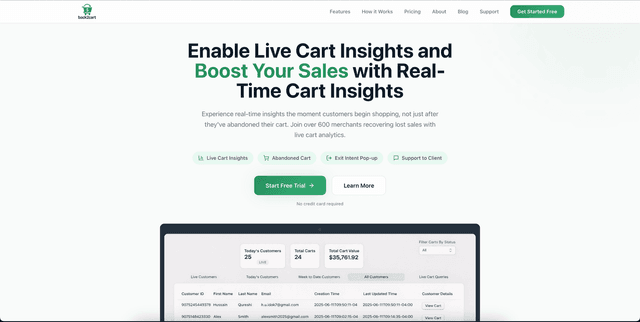
Mobile-first commerce workflow with lifecycle automation and merchant dashboards.
Read case study →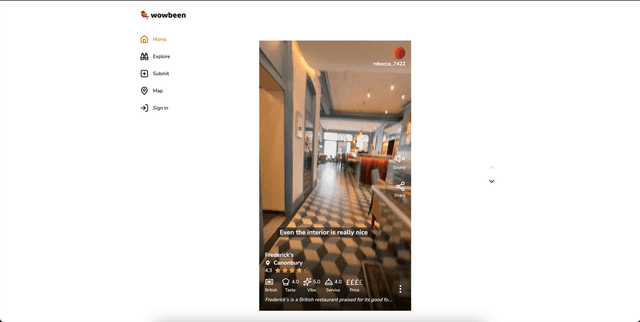
Consumer mobile MVP with video upload, ranking, and social features.
Read case study →
Field and warehouse operations with multi-channel inventory sync.
Read case study →What we build
Customer-facing PWAs
Replace a mobile web experience with an installable app. Users add to home screen, get push notifications, work offline. No app store required.
Internal tooling PWAs
Field workers, drivers, technicians need offline-capable mobile apps but app store distribution adds friction. PWAs distribute via URL or MDM (Mobile Device Management).
Ecommerce PWAs
Shopping experiences with offline browsing, fast checkout, push notifications for shipping updates. Conversion rates often 20 to 50 percent higher than mobile web.
Content and media PWAs
Reading, audio, video apps with offline content sync. Users download content while online, consume offline.
Productivity and collaboration PWAs
Internal team tools. Replace native Mac/Windows desktop apps with a single PWA that works across operating systems.
Related capabilities: Custom software development, Full stack development, Custom web applications, Mobile app development, Web development, AI-powered software, API integration.
Use cases with cost ranges
Customer-facing ecommerce PWA
Shopify Hydrogen or custom storefront delivered as a PWA. Offline browsing, fast checkout, push notifications for order updates. Add-to-home-screen prompt at checkout completion. Typical build 8 to 12 weeks. Range $12,000 to $38,000 depending on catalog size and personalisation depth.
Field service PWA
Driver, technician, or field worker app. Offline job list, photo capture, signature collection, sync on reconnect. Distributed via URL or MDM. Typical build 10 to 14 weeks. Range $14,000 to $38,000 depending on workflow complexity and offline sync requirements.
Internal productivity PWA
Replace separate Mac and Windows desktop apps with a single PWA. Sign-on via Google Workspace or Okta. Cross-platform installable. Typical build 8 to 12 weeks. Range $11,000 to $38,000 depending on feature scope.
Content media PWA
Reading, audio, or video app with offline content sync. Push notifications for new content. User authentication and content licensing handled. Typical build 8 to 12 weeks. Range $8,000 to $14,000 depending on content delivery complexity.
How we run the build
Five-phase rhythm for PWA builds. Service worker design happens in week 1.
- Discovery and PWA fitness (1 week). Use case assessment. Offline-required workflows mapped. Push notification strategy. Output: PWA capability matrix and scope.
- Architecture and design (1 to 2 weeks). Service worker strategy. Cache architecture. Offline data model. App shell design. Output: ADRs plus design system.
- Build (4 to 8 weeks). Two-week sprints. Service worker tested every sprint. Web Vitals gate on every PR.
- Performance and offline UAT (1 to 2 weeks). Lighthouse PWA audit. Offline scenario testing. Install rate measurement. Push notification testing across browsers.
- Launch and dual on-call (1 week plus 2 weeks). Production deploy. Service worker versioning strategy in place. Push notification monitoring. Runbook delivered.
Tech stack
Default PWA stack. Each layer chosen for offline reliability, install rate, and performance.
- Front end. Next.js with TypeScript and Tailwind CSS. App Router architecture optimised for service worker integration.
- Service workers. Workbox for caching strategy. Cache-first for app shell, network-first for API data, stale-while-revalidate for content. Background sync for offline writes.
- Offline storage. IndexedDB via Dexie or idb for structured data. Cache API for assets. Local first-write, sync-on-reconnect pattern.
- Web Push notifications. Web Push API with VAPID. Firebase Cloud Messaging optional for cross-platform consistency. Custom notification logic per use case.
- App manifest and install. Web App Manifest for installability. Install prompts surfaced at user-intent moments rather than on first visit.
- Performance. Core Web Vitals optimised. LCP under 2.5 seconds, INP under 200 ms, CLS under 0.1. Code-splitting and lazy loading by default.
- Integrations. REST or GraphQL backend. Stripe for payments. Auth via Clerk or NextAuth. Camera, geolocation, file system access via Web APIs.
Offline reliability and platform constraints
We document iOS versus Android PWA capability gaps at scoping (push, background sync, storage limits). Service worker versioning and cache invalidation are built in from week 1. HIPAA and GDPR patterns available where the build requires regulated data offline.
Pricing
PWA MVP
From $8,000
- Single workflow, basic offline support, no push notifications.
- 6 to 10 weeks.
Production PWA
From $14,000
- Multi-workflow, offline-first architecture, push notifications, install prompts.
- 8 to 12 weeks.
Custom PWA platform
From $38,000
- Multi-tenant or complex offline sync logic.
- 12 to 18 weeks.
Ecommerce PWA
From $12,000
- Storefront with offline browsing and fast checkout.
- 10 to 14 weeks.
Field service PWA
From $14,000
- Offline job execution with sync queue and photo/signature capture.
- 10 to 14 weeks.
Maintenance retainer
From $2,200 / mo
- On-call cover, service worker updates, push notification reliability monitoring.
FAQ
A Progressive Web App (PWA) is a web application built with modern web capabilities that can be installed on a user's device, work offline, and send push notifications. PWAs combine the reach of the web with the user experience of a native app. Examples: Twitter, Starbucks, Pinterest, Spotify all run PWAs in production.