
Mobile App Development Services iOS, Android & React Native
Senior team building native iOS, Android, and React Native apps for product teams that need real performance and clean app-store launches. Production shipped in 8 to 16 weeks. USD pricing.
We tell you whether native, cross-platform, or a PWA fits your product. No sales follow-up if we are not the right fit.
Get started in 60 seconds
Who we've built for.







How we work
- What we build
- Native iOS (Swift) · Native Android (Kotlin) · React Native cross-platform · Progressive Web Apps
- Stack
- Swift · SwiftUI · Kotlin · Jetpack Compose · React Native · Expo · Firebase · AWS Amplify · Stripe
- Backend
- Node.js · Python · PostgreSQL · Supabase · AWS · Azure · GCP
- AI on mobile
- On-device Core ML and TensorFlow Lite · OpenAI and Anthropic APIs for cloud inference
- Pricing in USD
- MVP from $8,000 · Production app from $19,000 · Cross-platform from $14,000
- Compliance
- GDPR · HIPAA · App Store and Google Play guidelines · SOC 2 ready
You already know what mobile apps are. You are here to find a team that ships one that survives App Store review, real users, and your roadmap. The rest of this page covers the platform decision, what we build, how we run a sprint, what drives cost, what we have shipped, and the questions every founder asks before signing the contract.
Industries we serve hardest
Mobile platform requirements vary sharply by industry. We have the deepest bench in five.
- Finance and fintechMobile wallets, trading apps, neobanking, regulated payment flows. PSD2 strong customer authentication, App Attest, Play Integrity API. Apple Pay and Google Pay integration plus biometric auth as default.
- Retail and e-commerceBranded shopping apps, loyalty programs, store companion apps with in-store BLE beacons, AR product try-on. Apple Pay and Google Pay with one-tap checkout flows.
- Healthcare and life sciencesPatient apps, clinical tools, regulated workflows under HIPAA. HealthKit and Health Connect integration. Telemedicine flows with HIPAA-compliant video.
- Marketing and mediaContent apps, creator tools, social and review platforms. Native video capture and editing, push-notification campaigns, in-app subscriptions.
- HospitalityBooking, mobile keys, guest portals. NFC and BLE for room access. Loyalty and tier-based features.
Recent mobile builds
We let the work speak. Three recent mobile builds.
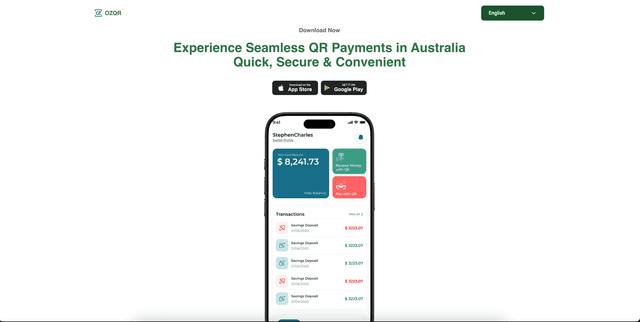
Consumer-facing wallet with payments and QR-based flows. Biometric auth, PSD2-aligned strong customer authentication.
Read case study →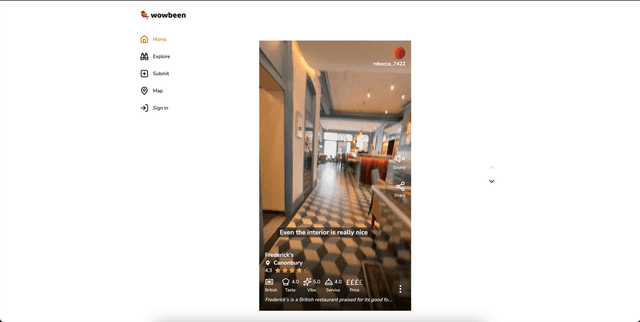
Social mobile app with native video capture, feed, real-time engagement.
Read case study →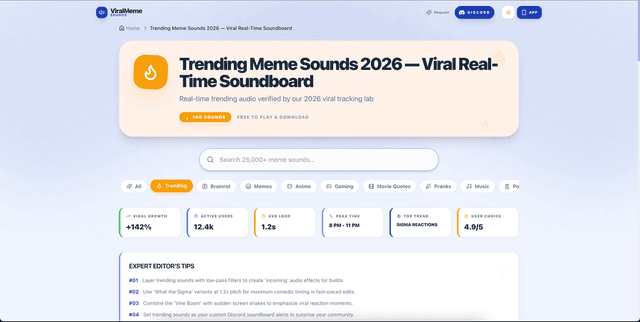
Cross-platform audio app with native sharing intents, low-latency playback, in-app purchases.
Read case study →Native iOS vs. Native Android vs. React Native vs. Flutter vs. PWA
The platform decision shapes cost, timeline, performance, and what features you can ship. Here is how the five common choices compare across the eight dimensions that matter most for a 2026 mobile build.
| Dimension | Native iOS | Native Android | React Native | Flutter | PWA |
|---|---|---|---|---|---|
| Performance | Best | Best | Very Good | Very Good | OK |
| Time to ship | Slowest | Slowest | Fastest | Fast | Fastest |
| Single codebase | No | No | Yes | Yes | Yes |
| Platform features | Full | Full | Most | Most | Limited |
| UI fidelity | Native | Native | Native via bridge | Custom render | Web-like |
| Bundle size | Smaller | Smaller | Medium | Larger | N/A |
| Team skill needed | Swift, SwiftUI | Kotlin, Compose | React, TypeScript | Dart | Web stack |
| Best for | Performance, Apple-deep | Performance, Android-deep | Most apps | Custom design, mid | Marketing, light apps |
Decision rules of thumb. Use native (Swift or Kotlin) when peak performance or platform-specific features (App Clips, Live Activities, HealthKit, Android Wear) drive the build. Use React Native when you can live with the rendering overhead and want one codebase across iOS and Android (about 70% of our builds). Use Flutter when design custom-render flexibility matters more than native-feel parity. Use a PWA when mobile-responsive web is enough and you want to avoid App Store review cycles entirely.
What we build
Native iOS apps
Swift, SwiftUI, UIKit when legacy support is needed. Best when you need App Clips, Live Activities, widgets, Lock Screen widgets, Dynamic Island, HealthKit, or peak performance with Metal rendering.
Native Android apps
Kotlin, Jetpack Compose, with XML for legacy screens. Best when you need full Material You theming, Wear OS, Android Auto, advanced background services, or deep Google Play Services integration.
React Native cross-platform
One codebase across iOS and Android. Built with Expo for the dev pipeline and EAS for builds. Fabric architecture for performance-sensitive flows. About 70% of our builds.
Flutter cross-platform
Dart-based with custom rendering. Best when you want pixel-perfect custom UI across platforms without native bridges.
Progressive Web Apps
Next.js or Vue with service workers, push notifications, offline support. Best for marketing apps, content tools, or anywhere App Store review would slow the release cadence.
Capability detail by service line: native mobile apps, iOS development, Android development, hybrid app development, FlutterFlow development, AI-powered mobile apps.
Use cases — concrete examples per industry
Fintech mobile wallet
Consumer wallet with stored cards, peer-to-peer transfers, QR payments. Stack: React Native with native modules for biometric auth and secure enclave access. Stripe Issuing for card issuance, Plaid for bank linking. PSD2 strong customer authentication via biometrics plus PIN fallback. Crash-free rate target 99.9% per Firebase Crashlytics. Typical build 14 to 18 weeks. From $21,000.
Retail loyalty app
Branded shopping app with browse, checkout, loyalty tier display, in-store BLE beacons for proximity offers. Stack: React Native with Shopify Storefront API, Apple Pay and Google Pay, OneSignal for push notifications, Branch for deep links. Build target sub-2-second cold start. Typical build 10 to 14 weeks. From $14,000.
Healthcare patient app
Patient portal with appointment booking, secure messaging with clinicians, prescription refills, HIPAA-compliant video. Stack: Native iOS (Swift, SwiftUI) and Native Android (Kotlin, Compose) for HealthKit and Health Connect deep integration. Twilio Video for telemedicine. Auth via Auth0 with BAA. Audit logging for HIPAA. Typical build 14 to 20 weeks. From $24,000.
Creator content app
Video creation and sharing app with native camera, editing, music library, push-notification engagement. Stack: React Native with VisionCamera for low-latency capture, FFmpeg for editing, Mux or Cloudflare Stream for delivery. In-app subscriptions via RevenueCat. Typical build 10 to 14 weeks. From $14,000.
Industry benchmark
Per Clutch 2026 mobile development cost survey, iOS mobile dev rates range $25 to $249 per hour with senior US and Western European agencies at the upper end. We do not bill hourly. Our fixed-scope MVP from $8,000 maps to roughly 250 to 350 senior engineering hours plus design and testing.
How we run a mobile sprint
Mobile builds are different from web. App Store review adds 24 to 72 hours of fixed latency on every release. The cadence accommodates that.
Sprint structure
Two-week sprints, deploys to TestFlight on iOS and Play Internal Testing on Android every sprint, weekly demo on Tuesday morning your time zone, daily Slack standup written by 9am your time. No video standups unless we hit a blocker.
Deploy gates
Every TestFlight or Play build passes three gates before going out. (1) Automated test suite green on CI. (2) Critical-path manual smoke test on three real devices (one current iPhone, one current Android, one older device matching your audience). (3) Lighthouse PWA score above 90 if the build is a PWA. If any gate fails, the build does not ship to your QA team.
Test pyramid
We follow the classic Mike Cohn pyramid adapted for mobile. (1) Unit tests for business logic (target ~60% of test count). XCTest on iOS, JUnit on Android, Jest on React Native. (2) Integration tests for API contracts and data flow (~25% of test count). (3) End-to-end UI tests on critical paths only (~15% of test count). Detox for React Native, XCUITest for native iOS, Espresso for native Android. We do not chase 100% coverage. We chase coverage on the paths that hurt if they break.
App Store and Play Store submission
We handle the first submission including listing assets (screenshots at all required sizes, app preview videos at 30 seconds, descriptions in English plus one additional language, age ratings, privacy nutrition labels for iOS, data safety form for Android). We respond to review feedback as part of the launch phase. About 15% of first submissions need a single revision. Apple ATT prompt configuration and Privacy Manifest as required by Apple from 2024.
Crash monitoring and analytics
Firebase Crashlytics or Sentry from Day 1. Mixpanel or PostHog for product analytics. Custom dashboards for cohort retention, day-1 and day-7 engagement, in-app purchase conversion. Weekly review of crash-free rate and key flows post-launch.
The stack we ship on
- Frontend (native iOS): Swift 5.9, SwiftUI for new screens, UIKit where legacy iOS 14 or 15 support is required. Combine and Swift Concurrency (async/await) for async flows. Xcode 16 for builds.
- Frontend (native Android): Kotlin 2.0, Jetpack Compose for new screens, View system where AndroidX migration is needed. Coroutines and Flow for async. Android Studio Ladybug for builds. Material 3 design system.
- Cross-platform (React Native): React Native 0.76 with the new architecture (Fabric + TurboModules). Expo SDK 51 plus EAS for CI and builds. Reanimated 3 for animations. TypeScript end-to-end.
- Backend (any platform): Node.js with NestJS or Fastify, or Python with FastAPI. PostgreSQL on Supabase or AWS RDS. Redis for caching. Stripe end-to-end for payments. Auth via Clerk or Auth0.
- Hosting: AWS (Frankfurt for EU workloads, US-East for NA, AP-Southeast for APAC), Azure when the client mandates, Vercel for the PWA frontend, plus Firebase or Supabase for managed BaaS.
- Mobile observability: Firebase Crashlytics or Sentry, Mixpanel or PostHog, Adjust or AppsFlyer for attribution if marketing spend justifies.
What drives mobile build cost
Mobile builds vary 3x to 5x in cost depending on six factors. Understanding which ones apply to your build is the difference between a sensible budget and a runaway one.
- Platform count. One platform (iOS or Android only) is ~60% the cost of both. Two native platforms is ~1.7x the cost of cross-platform.
- Number of user roles. Single-role apps (just end users) are baseline. Adding a merchant or operator role with separate flows adds 30 to 50%.
- Backend complexity. Apps with simple REST APIs are baseline. Apps requiring real-time WebSocket flows, video processing, or AI inference add 25 to 40%.
- Offline support. Apps that work without connection need local sync, conflict resolution, queuing. Adds 20 to 35%.
- Hardware integration. Bluetooth, NFC, AR, camera-with-CV. Each adds 15 to 25% per integration depending on depth.
- Compliance and audit requirements. HIPAA, PCI, SOC 2 readiness, App Tracking Transparency, Privacy Manifest. Adds 15 to 30% depending on scope.
Pricing
Cross-platform MVP (React Native)
From $8,000
- One core flow, one user role, auth, basic admin.
- 8 to 10 weeks.
Cross-platform production app
From $14,000
- Multi-flow, billing or in-app purchases, integrations.
- 10 to 14 weeks.
Native iOS or Android single platform
From $12,000
- One platform, one core flow with deep platform integration (HealthKit, App Clips, etc).
- 10 to 12 weeks.
Native both platforms (iOS plus Android)
From $19,000
- Full iOS and Android, shared backend, native UI per platform.
- 14 to 18 weeks.
PWA mobile-first build
From $6,000
- Mobile-responsive web with service workers, push, offline support.
- 6 to 10 weeks.
Maintenance retainer
From $2,250 / month
- Bug fixes, OS upgrade work (annual iOS and Android releases), dependency patches, App Store review responses, minor feature additions.
FAQ
React Native for most builds (one codebase, faster to ship, easier to maintain, ~25 to 35% lower cost than building both native platforms). Native when performance, animations, or platform-specific features (Live Activities, App Clips, Android Wear, deep HealthKit access) matter.