
Platform Implementation Services Configured to your workflow, not the demo
Retool, Microsoft Dynamics 365, Strapi, ClickUp, Odoo, Zendesk and Bubble, implemented against a written scope and shipped to your workflow. Fixed price from $3,000. Two to twelve weeks depending on the platform and the integrations.
We map your current workflow, name the platform decisions that matter, and give you a written scope before you commit a budget.
Get started in 60 seconds
Platform implementation is the work of taking a commercial platform such as Retool, Dynamics 365 or Strapi and turning it into software that fits how your team actually operates. It sits between the vendor demo and the production system: schema, permissions, integrations, workflows, custom fields, dashboards, migration from the tool you are replacing, and the training that makes the difference between shelfware and adoption. Parallel Loop implements against a written scope so what you get is defined before we start.
Who we've built for.







How we work on platform implementation
- What we implement
- Retool - Microsoft Dynamics 365 - Strapi - ClickUp - Odoo - Zendesk - Bubble
- Platforms
- Seven commercial platforms, each covering a distinct workload that keeps appearing in client engagements
- Integrations
- HubSpot, Salesforce, NetSuite, QuickBooks, Xero, Stripe, Segment, Slack, Microsoft 365, Google Workspace. SSO via SAML or OIDC against Okta, Microsoft Entra ID, Google Workspace or Auth0.
- Data migration
- Source audit, field-by-field mapping document, dry run against a copy of production, cutover with rollback ready, reconciliation report signed by an owner from your side.
- Training and adoption
- Two to three training sessions of ninety minutes each, delivered live and recorded, plus a written runbook. For editable platforms we also build an internal centre of excellence.
- Pricing in USD
- Retool from $3,500 - Dynamics 365 from $14,000 - Strapi from $3,000 - ClickUp from $14,000 - Odoo from $14,000 - Maintenance from $1,200/mo
- Who owns it after launch
- Your team, with a runbook and training. Platforms your ops team can edit directly are built so your team can extend them without waiting for a developer.
Buying a platform is the easy part. Implementing it is where most projects stall, because the vendor demo shows the platform on clean data with a fictional company, and your team has ten years of workarounds, three integrations nobody documented, and a spreadsheet that is doing more work than anyone will admit. This page covers the platforms we implement, how the scope is set, what the number depends on, and the questions operations leaders ask before signing. For custom integrations between the platforms and your other systems, see our custom business integrations guide and the API integration service.
Recent implementations
Platforms implemented against written scopes for operations, finance and partner workflows.
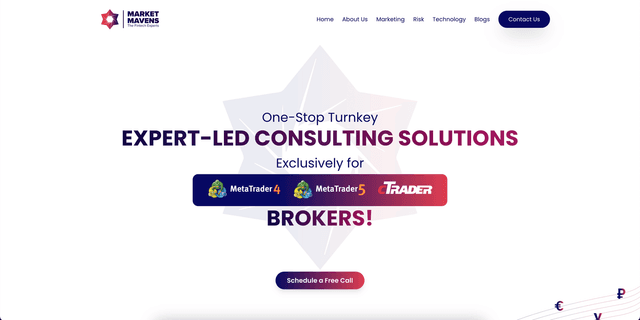
Agency platform with partner workflows and client sites for fintech and crypto brands.
Read case study →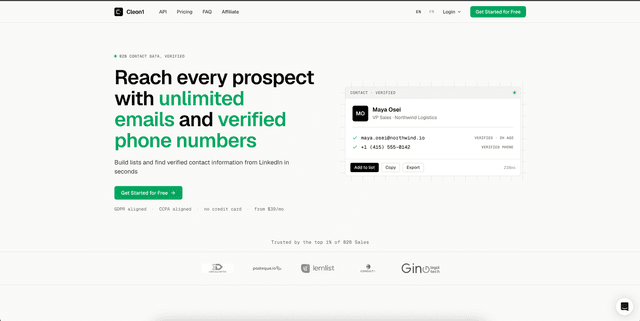
B2B enrichment platform with HubSpot integrations and custom internal review queues.
Read case study →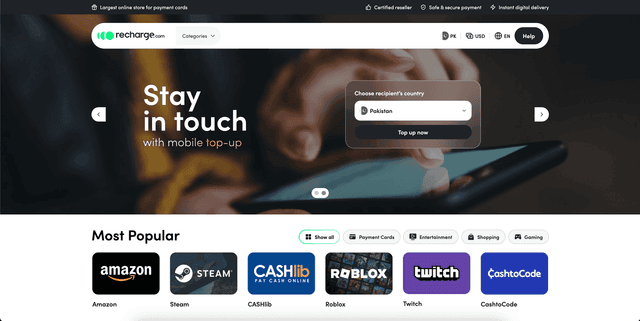
Reseller platform with regulated billing flows and account-based pricing.
Read case study →Platforms we implement
Retool for admin panels and internal tools
Retool for admin panels, operations dashboards and internal apps that replace shared spreadsheets. Common shape: a queue, a form and a report against your own database, with auth handled and permissions enforced server side. Read the internal tools development guide for the full build vs buy decision.
Microsoft Dynamics 365 for CRM and field service
Microsoft Dynamics 365 for CRM, sales and field service teams inside a Microsoft 365 estate. Configuration, custom entities, security roles, integrations with your ERP and marketing stack, data migration from your current CRM, and a full adoption programme.
Strapi for headless content backends
Strapi for content backends where marketing needs to publish across several front ends without asking a developer. Custom content types, plugin development, SSO, and front-end integration. See our headless CMS comparison for how Strapi stacks up against Contentful, Sanity and Payload.
ClickUp for cross-team operations
ClickUp for cross-team operations that outgrew a project management tool but do not need a full ERP. Workspace hierarchy, custom fields, automations, dashboards and migration from Asana, Monday or a spreadsheet. For field teams and workflows that break inside off-the-shelf tools, see custom collaboration tools for field industries.
Odoo for finance and operations
Odoo for finance and operations at mid-market scale. Module configuration, custom models, integration with your accounting platform and warehouse, data migration, and user training.
Zendesk for support desks
Zendesk for support desks that need custom triage, ticket routing, reporting and integration with your CRM and product systems. Includes agent workspace configuration, automation rules and custom apps.
Bubble for no-code operational apps
Bubble for operational apps that need a real interface without a full engineering team. Data model design, workflows, API connectors, permissions and deployment.
Related capabilities: Retool development, Microsoft Dynamics 365, Strapi CMS, ClickUp consulting, Odoo development, Zendesk development, Bubble.io development, CRM integration, API integration, Custom integrations, Enterprise solutions, Custom software development.
Use cases with cost ranges
Retool admin panel replacing three spreadsheets
Admin panel or internal app on Retool reading your database, exposing forms and reports, with auth handled and permissions enforced server side. Replaces shared spreadsheets or a shared inbox that had grown into the source of truth. Typical build 2 to 4 weeks. From $3,500. More Retool use cases from real ops teams.
Dynamics 365 sales module for a services business
Configured Dynamics 365 Sales or Field Service module for a team not using the out-of-the-box demo shape. Custom entities, security roles, integrations with your marketing stack and ERP, and data migration from your existing CRM. Typical build 6 to 10 weeks. From $14,000. Our Dynamics 365 implementation checklist covers what to line up before the vendor arrives.
Strapi content backend for a multi-site marketing team
Headless content backend on Strapi with custom content types, plugin development and front-end integration for a marketing team publishing across three or more sites. Includes editor training and SSO for the content team. Typical build 4 to 8 weeks. From $3,000.
ClickUp workspace for a forty-person operations team
Cross-team workspace on ClickUp with custom fields, automations, dashboards and migration from Asana, Monday or a spreadsheet. ClickUp for operations teams, in more detail. Typical build 2 to 4 weeks. From $14,000.
How we run an implementation
Five-phase rhythm for platform implementations. Scope defined before the build starts.
- Discovery and workflow map (1 week). We time the current workflow, identify the parts that do not fit the platform native shape, and map every integration. Output: workflow map and integration list.
- Platform decision and scope (1 week). Scope document naming every workflow, integration, migration step and report that will exist at launch. Acceptance criteria per deliverable. Output: written scope with acceptance criteria.
- Configuration and integration build (4 to 8 weeks). Platform configured in a sandbox, integrations wired and tested, custom fields and workflows built against the scope. Output: working configuration in a sandbox, demo at each phase.
- Data migration and UAT (1 to 2 weeks). Source audit, field-by-field mapping, dry migration against a copy of production, UAT signoff. Output: migration plan and UAT signoff report.
- Launch and adoption (1 week plus 4 weeks). Cutover with rollback ready, two to three training sessions, written runbook, adoption check at 30 and 90 days. Output: runbook and adoption training.
Integrations we run
Every implementation includes the integrations without which the platform is a silo. Identity federation, the CRM or ERP the platform must talk to, single sign-on, and the reporting layer.
- CRM and sales. HubSpot, Salesforce. Bidirectional sync, deal and contact mapping, pipeline triggers. See the <a href="/services/crm-integration">CRM integration service</a> for the connectors we run most often.
- Finance and ERP. NetSuite, QuickBooks, Xero, SAP. Chart of accounts mapping, invoice sync, purchase order flows. Batch or real time depending on the platform.
- Payments. Stripe, Zuora, Chargebee. Subscription state, payment events, refund flows. Idempotency required on every write.
- Identity and SSO. SAML 2.0 and OIDC against Okta, Microsoft Entra ID, Google Workspace or Auth0. SCIM provisioning for automated user lifecycle. Tested with leaver scenario before go-live.
- Collaboration and productivity. Slack, Microsoft 365, Google Workspace. Status notifications, approval routing, record creation from messages.
- Analytics and data warehouse. Segment, BigQuery, Snowflake. Event streaming from the platform into your warehouse for cross-system reporting.
- Custom integrations. Where the target system has no documented API, or where the integration encodes proprietary logic, custom code is handled through our <a href="/services/api-integration">API integration</a> and <a href="/blogs/custom-business-integrations">custom business integrations</a> services.
Data migration and adoption
Migration is the phase that overruns most often, and it should be scoped separately from the build. We plan for it explicitly: source audit, mapping document, dry run against a copy of production, cutover with rollback ready, and a reconciliation report signed by an owner from your side. Where the source is a spreadsheet or a system with no export, migration is scoped as a separate line rather than absorbed into the build price. Adoption is the difference between a platform being used and being ignored. We deliver two to three training sessions of ninety minutes each, live and recorded, plus a written runbook. For platforms your team will edit directly - Retool, ClickUp, Bubble - we also build an internal centre of excellence so your ops team can extend it without waiting for a developer. Adoption checks at 30 and 90 days confirm usage is above the baseline.
Pricing
Prices are starting points for the implementation shapes we deliver most often. Your number depends on how many systems the platform must integrate with, the quality of the data in your existing tool and any compliance scope.
Retool admin panel
From $3,500
- Admin panel or internal app with two to four integrations.
- 2 to 4 weeks.
Dynamics 365 module
From $14,000
- Configured module for CRM, sales or field service with integrations and migration.
- 6 to 10 weeks.
Strapi CMS build
From $3,000
- Headless content backend with custom content types and front-end integration.
- 4 to 8 weeks.
ClickUp workspace
From $14,000
- Cross-team workspace with custom fields, automations and reporting.
- 2 to 4 weeks.
Odoo module
From $14,000
- Configured Odoo module for finance or operations with integrations.
- 6 to 10 weeks.
Maintenance retainer
From $1,200 / mo
- On-call cover, platform updates, integration health checks, small workflow changes.
FAQ
Platform implementation is the work of turning a commercial platform such as Retool, Microsoft Dynamics 365, Strapi, ClickUp or Odoo into software that fits how your team actually operates. It covers schema, permissions, custom fields, workflows, integrations with the systems the platform must talk to, data migration from the tool you are replacing, and the training that makes the difference between the platform being used and the platform being ignored.